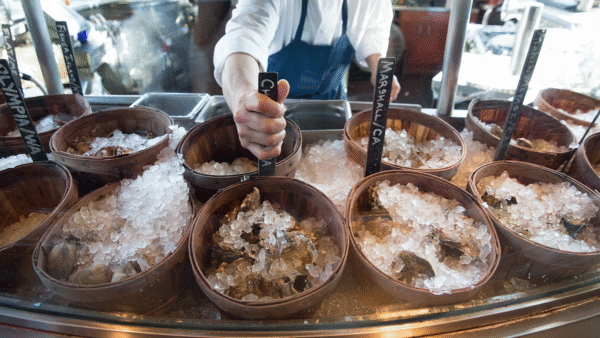

From pop-up traveling oyster bars to $1 promotions and happy-hour specials, oysters are seemingly becoming more and more trendy. But still, the mollusk continues to be somewhat of a polarizing protein, with the slippery texture and fear of illness a deterrent for some (even despite its aphrodisiac distinction).
Chef Parke Ulrich of Waterbar in San Francisco said that he’s noticed an increase in appetite for oysters since the restaurant’s founding in 2008. He said that some oyster farmers seem to be struggling to keep up with demand, noting that some East Coast farmers won’t sell to Waterbar because they need to prioritize local clients. Ulrich has also noticed oysters are getting smaller because the farmers are harvesting earlier and earlier to keep up with demand.
Check out the deals of the day on Amazon’s Kitchen Outlet
Waterbar donates a nickel of every oyster that it sells to charity, and Ulrich says that number has consistently grown over the years. Per day, the restaurant goes through 3,000 oysters. On Sunday, Waterbar is hosting its annual OysterFest, a charity event that goes through 12,000 oysters in just three hours.
Chef Ulrich answered some common oyster questions and debunked common misconceptions.
Are oysters seasonal?
Not really, Ulrich said, explaining that oysters are a farm-raised product. You do not have to abide by the old wives’ tale to only eat oysters in the months with the letter “R” (September through April), he said, but oyster flavor and texture can vary depending on the month. A summer oyster is spawning and may become creamy, especially if the oyster knife punctures the oyster while being shucked and some of the eggs come to the top.
“In the winter, when the water’s cold, they’re eating a lot, they’re picking up lots of nutrients in the water, and they’re getting big and plump. So, the winter months are the best time to eat oysters,” he said.
What should oysters smell like?
Ulrich recommends ordering oysters from a restaurant that moves a lot of oysters, explaining that the expiration time on oysters starts as soon as they’re out of the water. At a restaurant or grocery store, oysters are alive until they’re shucked. An oyster holds its shell close with its abductor muscle.
“When they’re getting weak and dying because they’ve been out of the water, they start to open up, and that’s when you get the chance of getting sick,” he warned.
Here’s Amazon’s ‘most-wished-for’ in kitchen and dining
If you’ve ordered shucked oysters at a restaurant, there’s no visual test to check for foodborne illness, but if they smell sour and don’t smell like the ocean, Ulrich advises not to eat them.
Why are some oysters sweet and some are briny?
Oysters are a product of their environment, Ulrich explained, noting that cold water creates a more briny oyster.
“In the industry, they call it merroir, like how the wine industry calls it terroir,” he said. “A Cabernet grape is a Cabernet grape, but depending on where it is grown, based on the soil, based on the sunlight, it can create a different flavor in the grape. So that’s the same with oysters.”
Le Creuset now makes products for food on the go
There are five species of oysters in the United States. Kumamotos, originally from Japan, are small in size and primarily grown on the West Coast. Olympia oysters, originally from the West Coast, are about the size of a thumb and are coppery in flavor. The Miyagi, which originated in Japan, are grown on the West Coast. The Flat oyster, originally from Europe, are the only oysters available that are wild. The Virginica oyster is grown on the East Coast.
Ulrich continued that a Virginica oyster grown at the bottom of Chesapeake Bay has a very different flavor from a Virginica oyster grown near Long Island. Because of Chesapeake Bay’s freshwater content, oysters grown there would be significantly less briny than those near Long Island.
What ingredients do oysters pair well with?
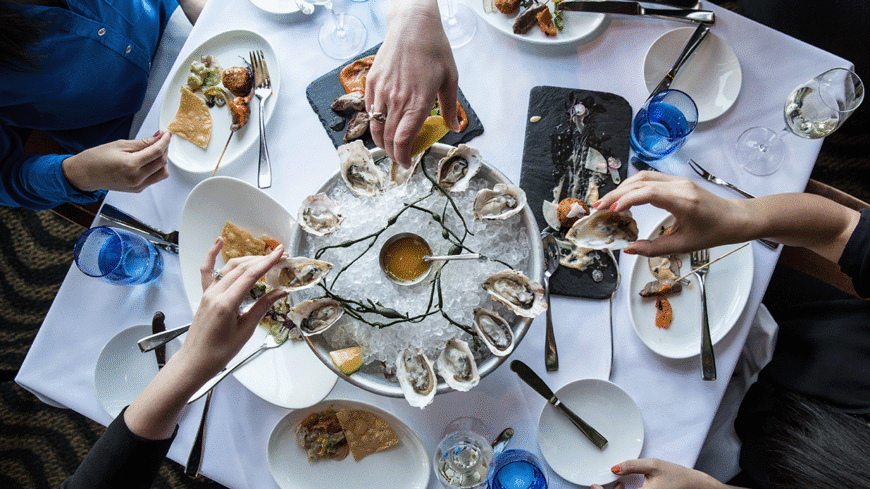
Ulrich recommends pairing oysters with light and bright flavors. A classic oyster pairing is mignonette, a sauce made from vinegar, shallots and crushed black pepper. Ulrich likes to make variations on the classic sauce, adding apple, fennel or even cucumber.
Continuing the light and bright theme, pair oysters with a Sauvignon Blanc, Chenin Blanc, Champagne or sake.