Induction cookware is everywhere, but what exactly is an induction stove?
For years, the question of what type of stove to get has centered on two main options: gas or electric. In recent years, a third player has entered the chat, and it brings quite a few exciting features that edge it past the usual stove options. Induction stoves are the new kid on the block, and they offer benefits that traditional stoves cannot. Once you understand how they operate, you can decide if it’s worth it to invest in your own induction stove.
What is an induction stove?
Instead of using gas or standard electric, induction stoves use electromagnetism to heat compatible cookware, with the magnetic field generating currents that cause the metal cookware to become the heat-producing element that actually cooks the food. Because it only generates heat through the cookware on its surface, an induction stove is a lot more efficient than gas or electric stoves. This improved efficiency can mean lower electric bills compared to a traditional electric range. Additionally, its lack of indoor air pollutants make it a safer option compared to a gas range, which can produce nitrous oxides, carbon monoxide and formaldehyde, all of which are associated with ill health effects including worsening of respiratory conditions.
How does an induction stove work?
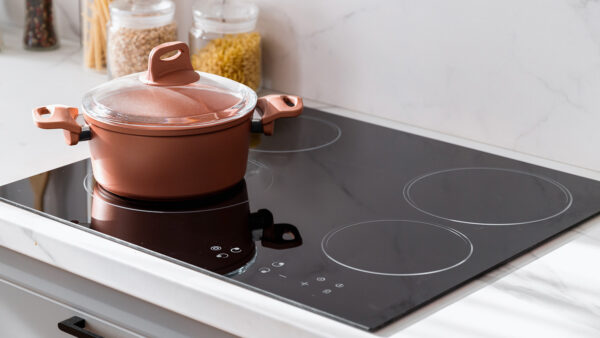
While traditional cooktops heat up cookware using a gas flame or an electric burner, induction cooktops work differently. Instead of heating the surface, they use an electromagnetic field to create heat directly inside the cookware sitting on the glass cooktop. Because the heat is generating from within the cookware itself, cooking happens faster and stops almost instantly after removing the cookware from the stove. This means the cooktop is safer than a traditional gas or electric stove, because it stays a lot cooler throughout the process and cools down completely much more quickly.
What kind of cookware do you need for an induction stove?
To use an induction cooktop, you’ll need cookware with a flat bottom that’s magnetic—if a magnet sticks to it, it should work. Most modern induction cooktops also feature a durable ceramic-glass surface that’s designed to resist cracks and stand up to everyday use.
What are the pros of an induction stove?
- Induction stoves are safer than gas or electric stoves. When you remove cookware from an induction stove, the stove cools off quickly, and they can’t be turned on accidentally. Additionally, most induction stoves will turn off automatically if there is no pot or pan on top of it. It’s also safer than a gas range, which produces dangerous fumes that can cause health problems, even when it’s not turned on.
- Most induction stoves can boil water and cook food faster than gas and electric cooktops, reducing the time it takes to prepare meals.
- Induction stoves can save you money in terms of energy costs, as they operate more efficiently than a traditional electric range.
- The surface is easier to clean than a gas range, with its flat top faster to wipe down than gas burners that are more complicated to wipe.
What are the cons of an induction stove?
- If you do not already own compatible cookware, you will need to purchase new cookware that a magnet can stick to and has flat bottoms.
- While you can expect to save on energy costs with an induction stove, the upfront cost to purchase the appliance is likely going to be more than a traditional gas or electric stove.
- An induction stove will not work during a power outage, but neither would a traditional electric stove, so this will only be an issue if you are used to a gas range.
- If you are used to cooking on a gas range, there will be a learning curve to working with an induction stove.
Bestselling induction cookware to consider
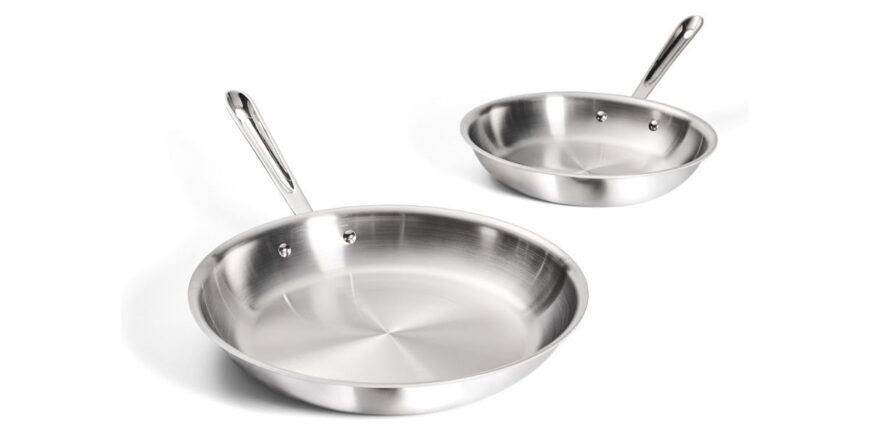
All-Clad D3 Stainless Steel 10 and 12 inch Frying Pans Set
This set of two frying pans would be a great start to your induction cookware collection as the sizes are versatile and the D3 tri-ply construction makes them sturdy and long-lasting. The handles are riveted for an easy underhand grip and the edges are flared to make drip-free pouring easier.
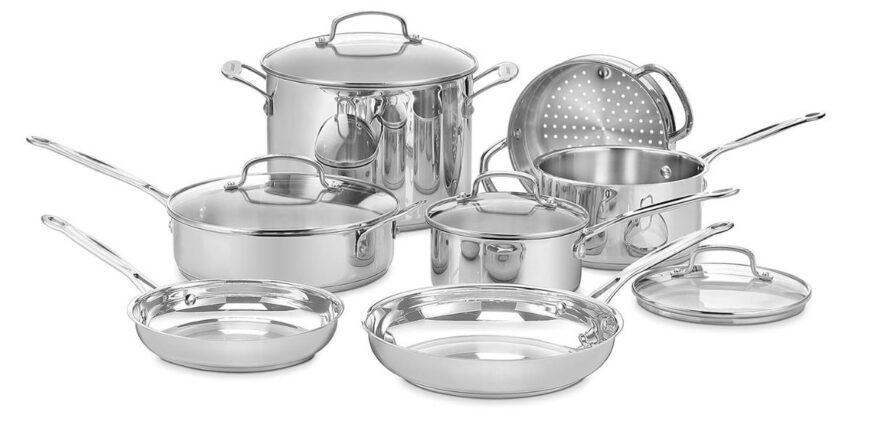
Cuisinart Chef’s Classic 11-Piece Stainless Steel Pots and Pans Set
If you’re looking for a complete collection of induction stove-compatible cookware, this set from Cuisinart will probably suit all of your needs. Our cooking expert calls it “an excellent choice” thanks to its longevity. It has 11 pieces including 1.5-quart and 2.5-quart saucepans with glass covers, a 3-quart saucepan with a glass cover and helper handle, an 8-quart stockpot with a glass cover, an 8-inch skillet, 10-inch skillet and 7-inch steamer insert.
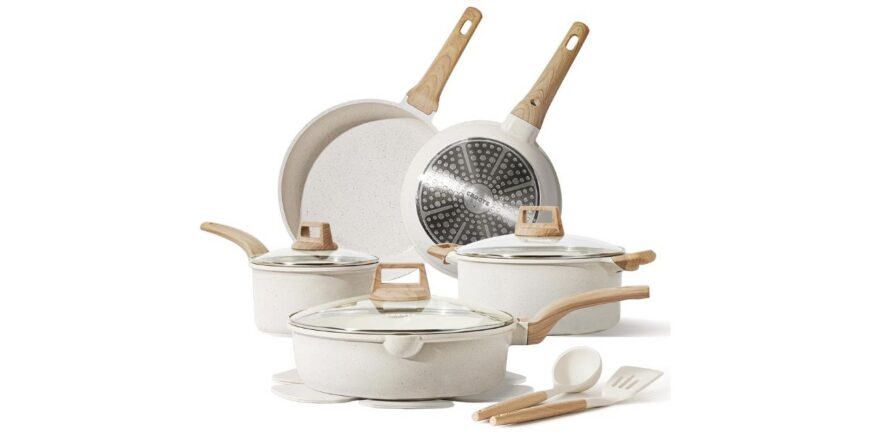
CAROTE Pots and Pans Set, Nonstick Cookware Sets, 14pcs
For those looking to grab some induction cookware basics on a budget, this set from Carote is a great value. It includes two frying pans, a stockpot, a saute pan and several accessories. The cookware has an interior made of nonstick granite material that more effectively releases food and doesn’t contain any toxic materials.
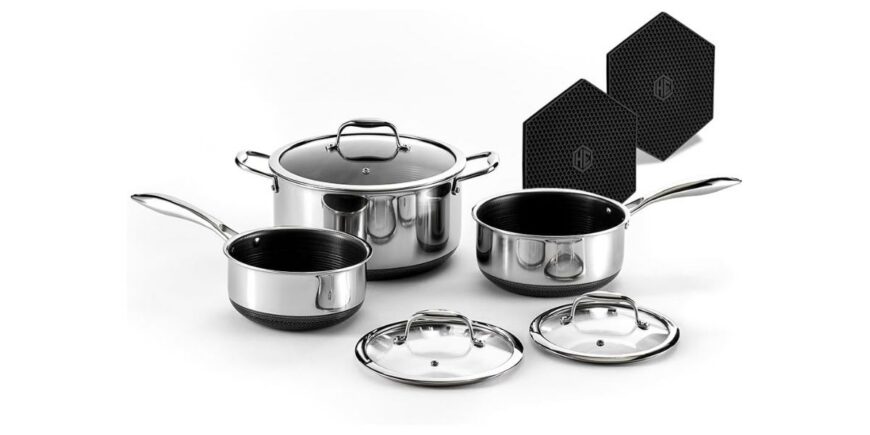
HexClad Hybrid Nonstick 6-Piece Pot Set
This set includes three pots with corresponding lids and two silicone trivets. The cookware features a laser-etched hexagonal nonstick surface made of stainless steel and HexClad’s ceramic coating. It makes the cookware easy to clean and gives food a good sear. The material is metal utensil-safe and can even go in the dishwasher.
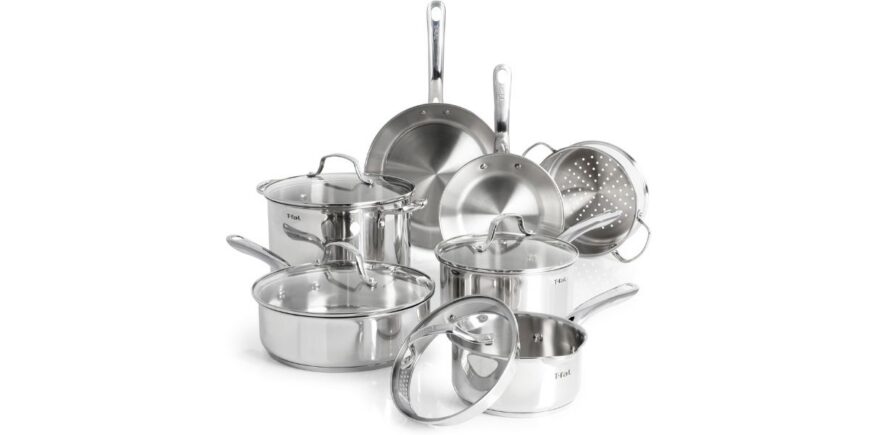
T-fal Stainless Steel Pots and Pans Set 11 Piece
With two frying pans, a saute pan, two sauce pans, a covered Dutch oven and a steamer, this stainless steel set covers all of the basics. This cookware doesn’t have any hot spots, so it cooks evenly on an induction range for consistent results every time. The pots have measuring marks, vented lids and pouring spouts for easy, mess-free cooking.
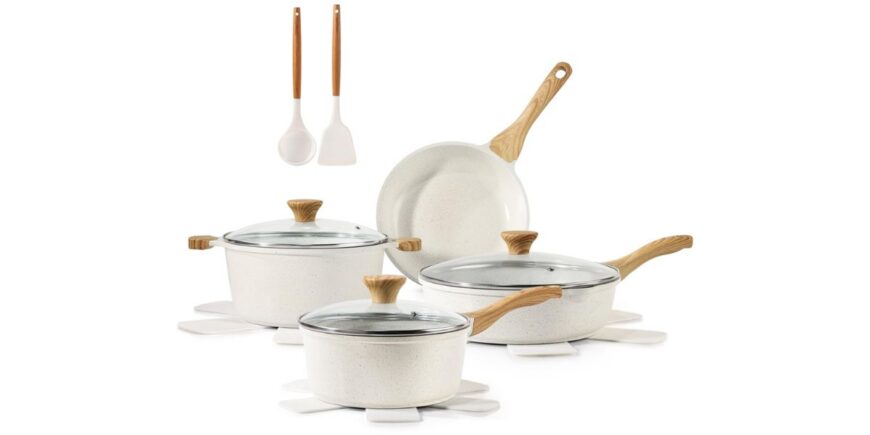
SENSARTE Nonstick Ceramic Cookware Set, 13-Piece
This 13-piece cookware set will help you get going with your induction stove for a low price. The pots feature a nonstick ceramic coating free of harsh chemicals so you can cook with confidence and the set includes silicone utensils and pot protectors. The smooth surface allows you to use up to 80% less oil than other types of cookware for healthier cooking. The handles stay cool and the lids are glass allowing you to monitor a closed pot as it cooks.