Kraft is attempting to push its signature Mac & Cheese into the wellness market with a new variety containing more protein — and ever-so-slightly more fiber — than its traditional blue box.
Kraft’s “PowerMac,” announced Tuesday, will be available for purchase in April.
PowerMac contains 17 grams of protein and 6 grams of fiber per serving. A prepared serving of Kraft’s “Original Mac and Cheese” contains 9 grams of protein and 5 grams of fiber per serving.
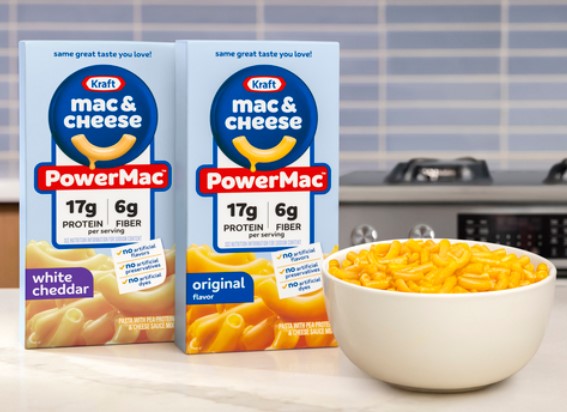
Kraft said the product took almost a year to create, and consumers will still get “creamy, craveable mac that has the same cheese taste you know and love.”
“We developed PowerMac for consumers who want more from their everyday meals without compromising on great taste. PowerMac delivers the benefits fans are craving in a way that only Kraft Mac & Cheese can,” Ashleigh Edmonds, senior director of marketing for Kraft Mac and Cheese, said in the release.
The product will be available in two flavors: original and white cheddar, both priced at around $2.99 per 7.25-ounce box.
The Girl Scouts want you to know something about those knockoff cookies
According to a July survey from the International Food Information Council, 70% of Americans said they’re trying to eat more protein, up from 59% three years ago. Responding to the wellness fad, numerous food brands have promoted protein-enriched versions of their signature offerings, and several major restaurant chains have even introduced specific protein-forward menus.
Newer guidance from Health Secretary Robert F. Kennedy Jr. also emphasized protein as part of a healthy diet, as seen in a new inverted food pyramid presented in January.
Some experts say, however, that Americans are generally getting enough protein in their daily diets already, or warn that a protein-rich diet might also be too rich in saturated fat.
“I agree that most Americans need to focus on protein, but people may not recognize that red meat, egg yolks and full fat dairy are sources of saturated fat; therefore these foods still need to be limited (in portion and frequency) and protein selections should vary to often include lean protein such as fish and seafood, egg whites, skinless poultry and legumes,” Registered Dietitian Julia Zumpano, of the Cleveland Clinic Center for Human Nutrition, told Nexstar.
Nexstar’s Michael Bartiromo contributed to this report.